
When the Expert Becomes the Daughter: Lessons from My Father's Hospice Journey
Part 3: The Small Things Were Actually the Big Things
My father elected hospice on April 30.
He died peacefully in the early morning hours of May 16.
Just sixteen days.
Sixteen days that forever changed how I define extraordinary hospice care.
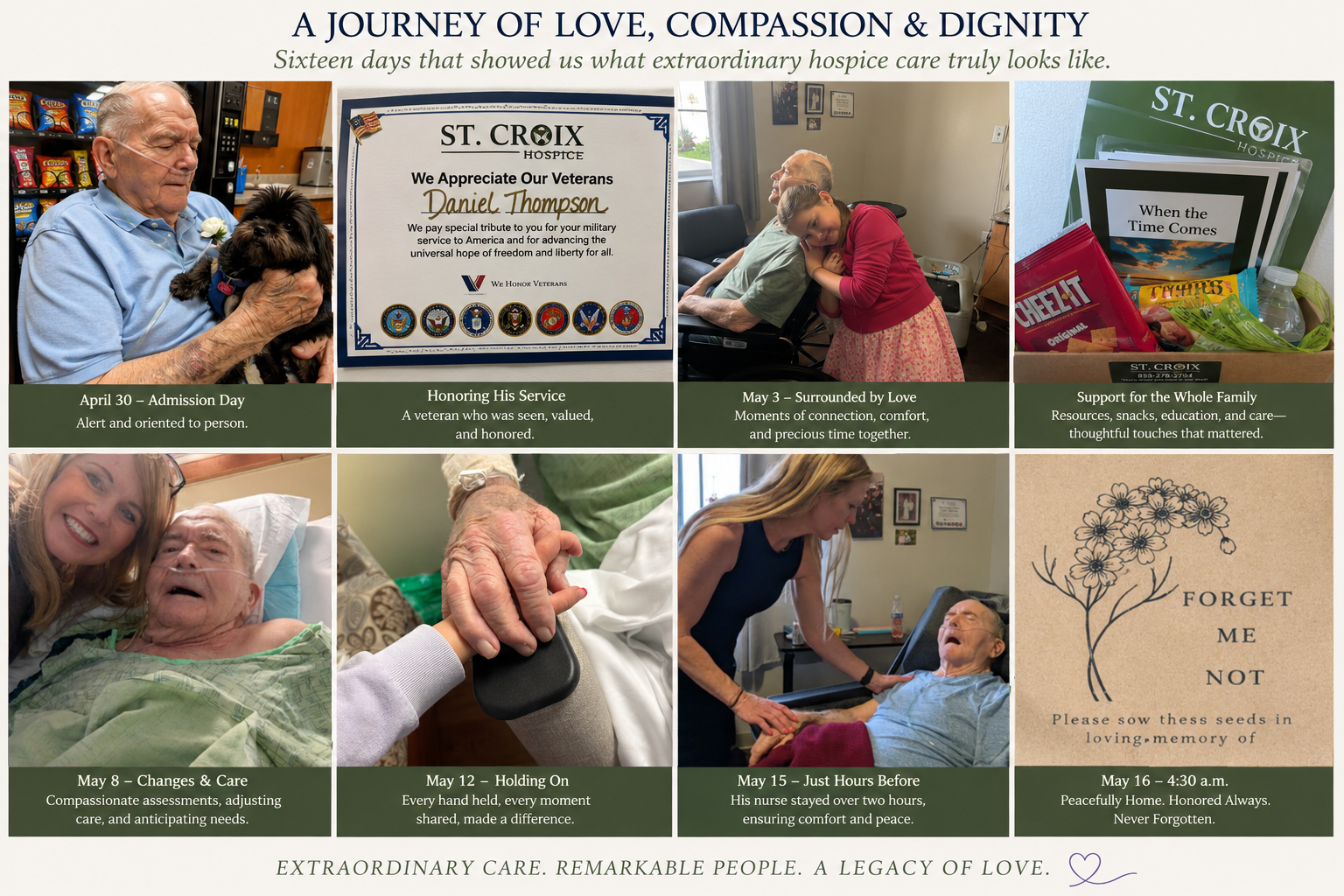
As someone who has spent more than three decades consulting with hospices across the country, I have taught agencies about quality measures, compliance, interdisciplinary care, and best practices. Those things absolutely matter.
But after walking this journey with my own father, I learned something much deeper.
Families don't remember regulations.
They remember how you made them feel.
From the day my father elected hospice, the team immediately began doing what exceptional hospice teams do best—they anticipated needs before they became crises.
His condition changed remarkably fast.
When hospice admitted him, he was still able to interact and recognize those around him. Within two weeks, he had become non-responsive. None of us expected the decline to happen so quickly.
Yet somehow, the hospice team always seemed to be one step ahead.
Every change in his condition was met with a reassessment.
Every new symptom was met with a thoughtful intervention.
Every new challenge was met with calm confidence.
There were twists and turns throughout his short hospice journey, but I never once felt that anyone was simply reacting.
They were anticipating.
They advocated relentlessly for the care he deserved. There were no less than a dozen medication changes during his short stay. Sometimes that even meant respectfully challenging the nursing facility's medical director to ensure my father received the medications and interventions he truly needed. They never lost sight of the goal—not simply treating symptoms, but protecting his comfort and dignity.
As a hospice consultant, I noticed the clinical excellence.
As a daughter, I noticed something even more important.
I never had to wonder whether someone was watching over my dad.
About a week before he passed away, one of the hospice nurses called and asked if I had time to talk.
We spoke on the phone, and later in person. She gently explained that their clinical software had identified subtle trends suggesting my father was entering his final week of life. Because of those changes, they were initiating what they called their Voyage Program, increasing nursing visits to daily.
I remember thinking, that can't be right.
He had only been on hospice for about a week.
Surely we had more time.
We didn't.
Exactly one week later, my father died peacefully.
As someone who has spent years educating providers about technology, I found this experience remarkable. It wasn't artificial intelligence replacing clinical judgment.
It was technology supporting exceptional clinicians.
The software recognized subtle changes that might not have appeared significant in isolation. Combined with experienced nursing assessment, it gave the team the opportunity to prepare before a crisis occurred.
To me, that is what healthcare should look like.
Technology serving compassion.
Not replacing it.
As my father's condition continued to decline, the daily visits became a source of reassurance for our family.
The day before he died, his hospice nurse spent more than two hours at his bedside.
She carefully assessed every change, quietly explaining what she was seeing while making sure he remained completely comfortable. Before leaving, she arranged for another nurse to return later that evening.
There was never a sense of rushing.
Never the feeling that we were simply another visit on someone's schedule.
They were exactly where they wanted to be.
And then there were all the little things.
The things no quality measure will ever fully capture.
A basket of snacks and refreshments appeared so family members wouldn't have to leave his bedside.
A thoughtful gift with practical essentials—and yes, even chocolate—reminded us that someone was thinking about us, not just our father.
The hospice provided an educational booklet called When the Time Comes, written in language my mother and sister could easily understand. It explained the physical signs of the dying process without creating fear.
I watched them hold that booklet while they sat beside my father.
They would look at him.
Then look back at the booklet.
Knowledge replaced fear.
Understanding replaced uncertainty.
There was something profoundly compassionate about that transparency.
It allowed my family to spend less time wondering what was happening and more time simply being present with Dad.
At 4:30 in the morning on May 16, my father peacefully took his last breath.
The hospice nurse arrived quickly.
She sat quietly with us.
When we needed time alone, she gave us space.
When we needed someone to simply be present, she returned and sat with us again.
There was no urgency.
No pressure.
Only kindness.
When it was finally time for the funeral home to arrive, the hospice team draped an American flag over my father's body before he was taken from the room.
He was a veteran.
They had honored his service throughout his hospice journey.
They honored him one final time as he left.
It was one of countless thoughtful gestures that reminded me this hospice never saw my father as a diagnosis or a room number.
They saw a husband.
A father.
A grandfather.
A veteran.
A man whose life mattered.
As I reflect on those sixteen days, I realize the moments my family remembers most are not the medication changes or the documentation or the clinical decisions.
We remember the nurse who stayed longer than she had to.
The therapist who brought joy into his room.
The educational resources that brought peace instead of fear.
The phone calls.
The snacks.
The hugs.
The flag.
The quiet moments when someone simply sat with us because they knew we shouldn't be alone.
Those were the small things.
But in the end...
they were actually the biggest things.
As hospice professionals, we often talk about providing comfort at the end of life.
My father's hospice team taught me that comfort extends far beyond the patient.
The very best hospice care wraps itself around an entire family.
And long after the medications are forgotten and the documentation is filed away, that is what families remember. For years, I have taught hospices how to provide exceptional care. My father taught me what exceptional care feels like.
In our final Part 4, I'll share the lessons I learned as both a hospice consultant and a daughter about choosing the right hospice. When the time comes, every family deserves to know what questions to ask, what excellence truly looks like, and how to recognize a hospice that will care not only for the patient—but for the entire family.